
Outcome Budgeting in India: From Expenditure Control to Results-Based Governance
Author: K. Bhanu Sri Poorna
Introduction
Governments are increasingly expected to measure not only how much public money is spent, but also what results it delivers for citizens. In India, outcome budgeting has emerged as an important public financial management reform that links budget allocations with measurable outputs and outcomes, promoting transparency, accountability, and evidence-based decision-making. Against the backdrop of recent governance reforms, this article examines the evolution and effectiveness of outcome budgeting, analyzes its institutional challenges through selected flagship programmes, and suggests measures to strengthen results-based governance in India.
An Outcome Budget is a public financial management tool that links government expenditure with the results expected from it. It distinguishes between outlays (financial resources allocated), outputs (goods or services delivered), and outcomes (the actual changes or benefits achieved for citizens) (Mishra, 2011). Building on this approach, an Outcome Budget Statement connects financial allocations with clearly defined objectives and measurable outcomes, enabling governments to assess not only how much money is spent but also what it achieves (Mahendru, 2021).
Evolution of Outcome Budgeting and Results-Based Governance in India
In FY 2026-27, the Outcome Budget was renamed as Output Outcome Monitoring Framework (OOMF). This framework presents the financial outlay with clearly defined outputs and outcomes statements, measurable output and outcome indicators, and specific output and outcome targets. Through this reform, the Government aims to shift from tracking expenditure alone to measuring the results achieved through public spending (Ministry of Finance, 2026). However, the reform is the result of a much longer evolution in India’s public financial management system.
Performance budgeting was introduced in 1969 based on the recommendations of the Administrative Reforms Commission to measure performance of development programmes. The scope has expanded to outcome budgeting in 2006-07 to measure results, where the Ministry of Finance decided that individual Ministries and Departments would present their own Outcome Budgets for non-plan expenditures as well. Following this, the ‘Outcome Budget 2006-2007’ covers all Plan schemes of the Ministry and selected Non-plan schemes where outlays can be related to functional objectives, which continued till 2016-17 (Ministry of Finance, 2026). The Result Framework Document (RFD) was introduced in 2009-10 to define the objectives, policies, programmes and projects of central ministries along with measurable performance indicators. Its first full evaluation cycle began in 2010-11 (Anand Trivedi, 2022).
The OOMF for measuring progress of Central Schemes and Centrally Sponsored Schemes was entrusted to DMEO in mid-2017. Outcome Budget statements are prepared by Ministries and Departments to link financial outlays for each scheme or project with measurable outputs, deliverables and mid-term outcomes (DMEO, 2023a). This framework has been laid before Parliament along with the Union Budget every year since 2019-20. The 2021-22 OOMF covered 67 ministries and departments, more than 600 CS/CSS, nearly 6000 indicators, approximately 40% of the central government’s expenditure budget (DMEO, 2023a). This scale suggests that outcome-based monitoring is no longer confined to a few programmes but has become an important component of India's public expenditure management.
According to the Sixteenth Finance Commission, schemes ending at the close of the Fifteenth Finance Commission cycle and proposed for continuation into the next cycle will undergo appraisal and approval based on an outcome review (Chitravanshi, 2025). This shows that outcome assessment is increasingly becoming a prerequisite for the continuation of public programmes.
Effectiveness of Outcome Budgeting
One of the major achievements has been the institutionalization of the Output-Outcome Monitoring Framework (OOMF) by the Development Monitoring and Evaluation Office (DMEO), which has strengthened outcome-based monitoring across government programmes over the past four years. Following the presentation of the Outcome Budget, a centralized online dashboard has been developed to monitor implementation. Starting from the subsequent financial year, it will track the targets established in the Outcome Budget across the 67 Central Ministries and Departments. The dashboard tracks around 5,000 output and outcome indicators, enabling ministries to monitor both expenditure and performance (Anand Trivedi, 2022).
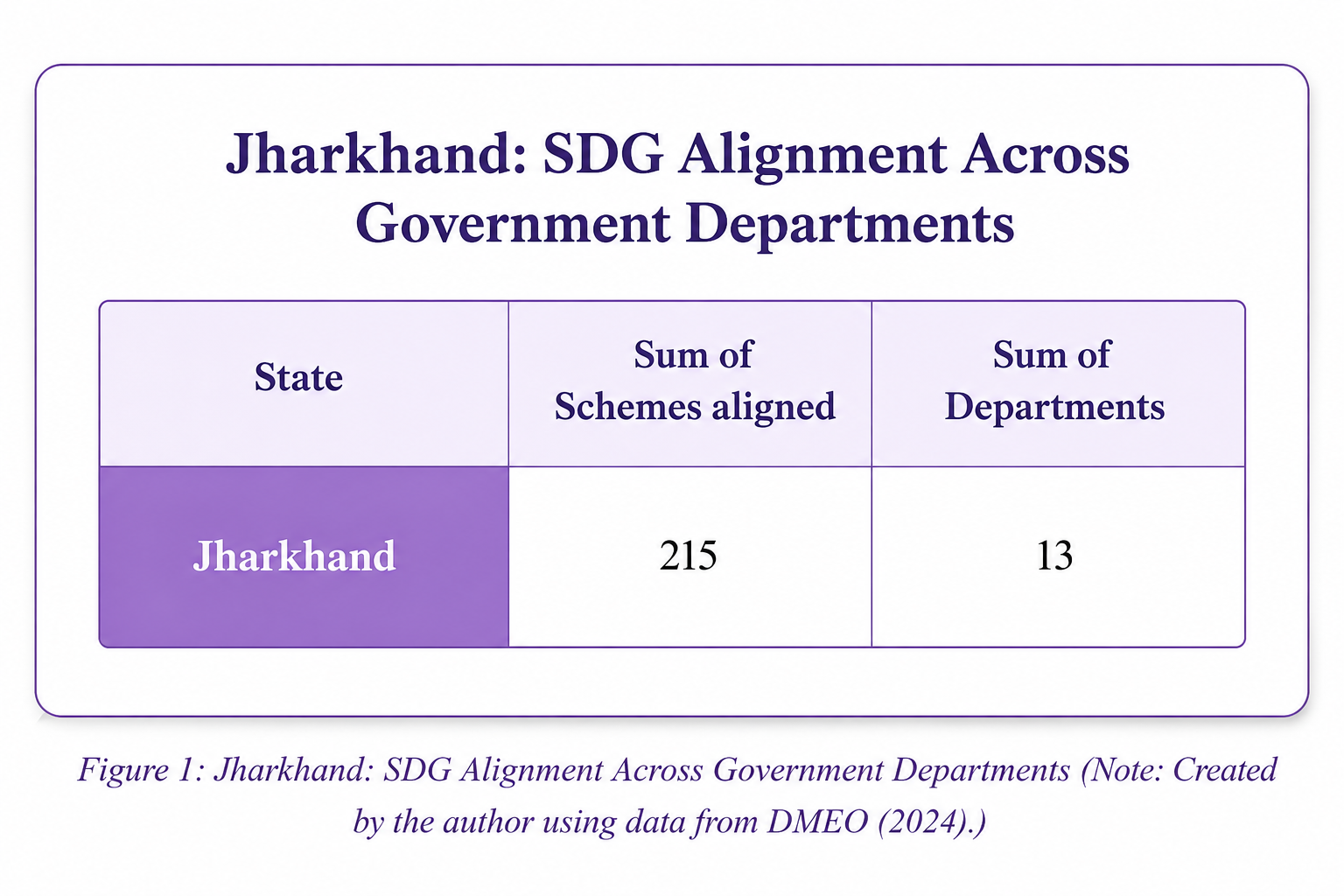
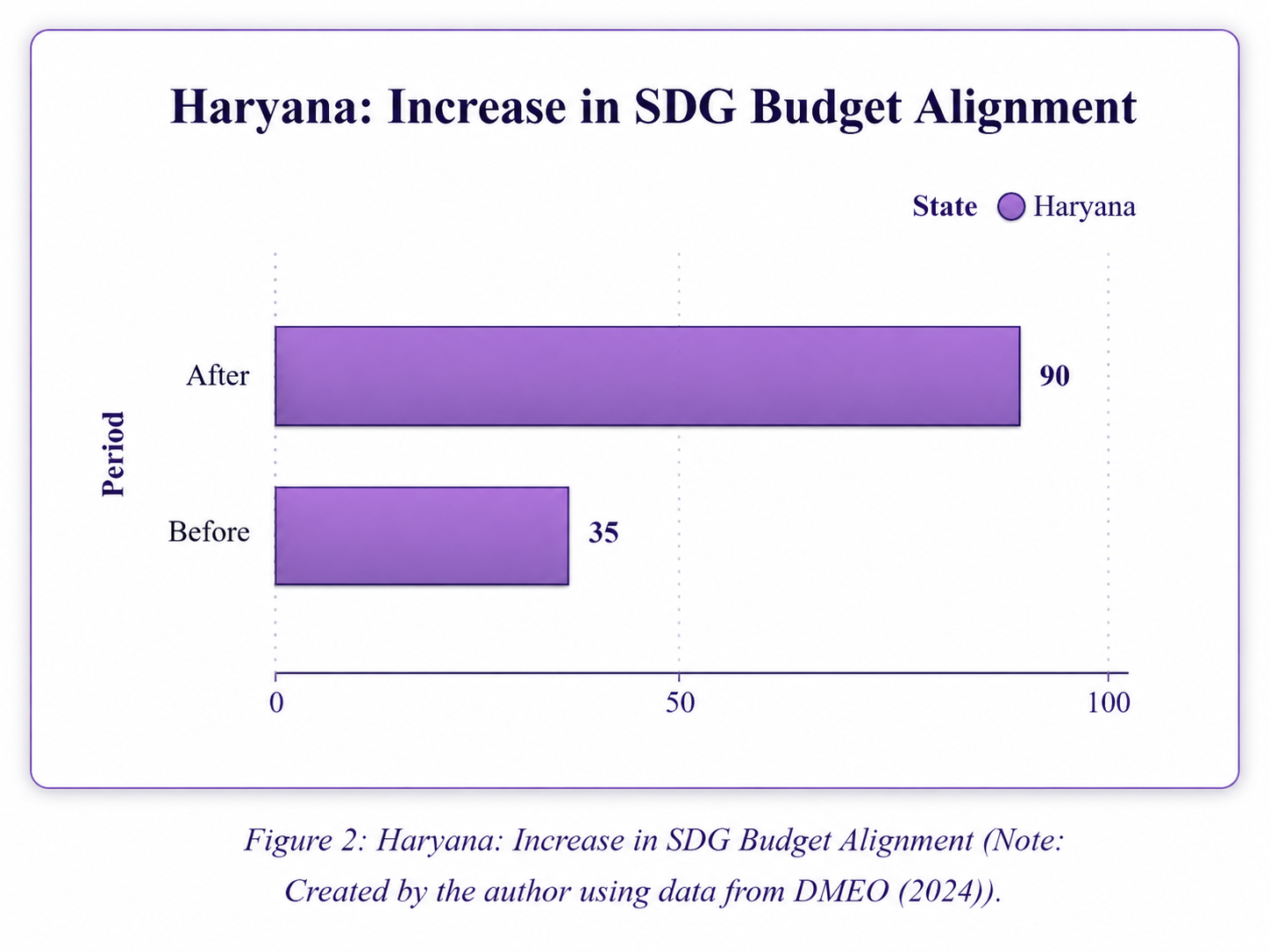
States’ experiences reflect that the framework is gradually influencing budget planning beyond the Union Government. Haryana raised its share of state budget aligned with SDG indicators from 35% to over 90%. However, Jharkhand aligned 215 schemes across 13 departments with SDG indicators, but reported difficulty with real-time output reporting and full indicator integration (DMEO, 2024).This shows that the institutional capacity remains uneven.
The uneven adoption of outcome budgeting across states is not a recent challenge. CBGA's 2021 review found that only 11 States and the Union Government had prepared Outcome Budget Statements, with an average departmental coverage of just 65.8 percent. This suggests that while some states have made significant progress, institutional adoption of outcome budgeting has remained uneven across the country (Mahendru, 2021).
Since the launch of the Jal Jeevan Mission (JJM) in 2019, 16.7% of 193.5 million rural households had tap connections and by March 2026 the coverage reached 81.6% driven by the addition of 125.5 million new connections (Chatterjee, 2026).
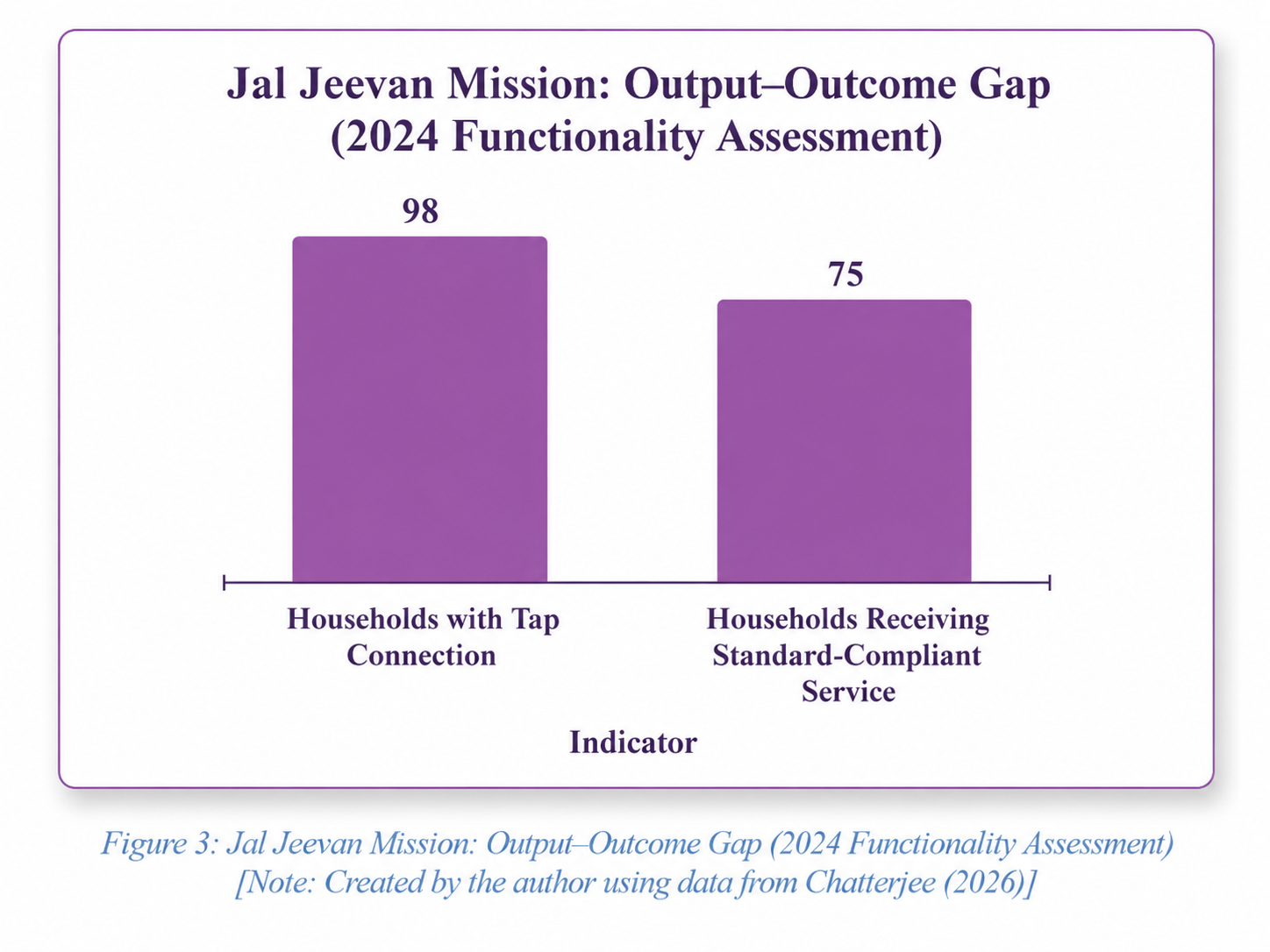
However, the 2024 functionality assessment reveals that 98% of households had functional tap connections (output) but only around 75% received water that met the Mission's prescribed standards for quantity, quality, and regularity (outcome). This substantiates that infrastructure creation does not necessarily translate into sustained service delivery, highlighting the importance of outcome-based monitoring.
Despite improvements in monitoring, challenges in accountability remain. The CAG has not conducted a Union level performance audit for the implementation of the MGNREGA since 2013 (Dasgupta, 2023). Without regular independent performance audits at the national level, it becomes difficult to verify whether reported outcomes accurately reflect programme performance.
Concerns regarding the reliability of outcome reporting are not new. A Comptroller and Auditor General (CAG) performance audit of the National Rural Drinking Water Programme (NRDWP), covering 2013–14 to 2016–17, found substantial gaps between planned outcomes and actual achievements. While annual targets were achieved during the first two years, performance declined sharply in the following years. The audit also reported inconsistencies between the figures presented in the Outcome Budget and those recorded in the Integrated Management Information System (IMIS). Based on these findings, the CAG concluded that there was no direct correlation between financial outlays and physical outcomes (CAG, 2018). These observations closely resemble the output–outcome gap identified in the Jal Jeevan Mission, suggesting that challenges in measuring service outcomes have persisted in the water sector for nearly a decade.
Institutional and Implementation challenges
Implementing outcome budgeting also requires capacity-building among ministerial and departmental staff, along with continuous coordination between the Ministry of Finance, line ministries, and state planning departments to define indicators, collect data, monitor progress, and ensure effective implementation (DMEO, 2024).
Reliable outcome monitoring depends on reliable data. DGQI is a self-assessment toolkit for ministries and states to measure "data maturity" for scheme monitoring. DGQI 2.0 assesses institutions across three pillars- Data Strategy, Data Systems and Data-Driven Outcomes- to identify strengths, gaps and priorities for improving data governance (DMEO, 2023b).
Output Outcome Monitoring Framework (OOMF) functions through executive and administrative arrangements rather than a dedicated Public Financial Management law. The Fifteenth Finance Commission recognized the need for a comprehensive PFM legal framework. India still lacks a single legislation governing budgeting, expenditure management, monitoring and evaluation (James et al., 2022). Rather than waiting for a new legal framework, the 16th Finance Commission recommended that states conduct rigorous, mandatory outcome evaluations and periodic reviews of all subsidy schemes, particularly those involving unconditional cash transfers. It mandated that loss-making State Public Sector Enterprises (SPSEs) undergo formal evaluations, potentially leading to closure or privatization (PRS, 2026).This indicates that institutional reforms are increasingly being used to address a legal gap that remains unresolved.
Transparent methodology is equally important as a defining indicator. The gender budget allocation for the Jal Jeevan Mission rose from 30% to 80% despite the unchanged scheme’s budget at ₹67,000 crore. For some schemes, like MGNREGA, data can justify it based on the proportion of women working, but classifying gender to universal water infrastructure cannot be justified. Since the methodology underlying this reclassification was not publicly explained, it becomes difficult for policymakers and researchers to independently assess the consistency and reliability of the reported outcomes. This reveals the importance of defining and publishing clear methodologies with outcome indicators (Shankar, 2026).
Case Studies
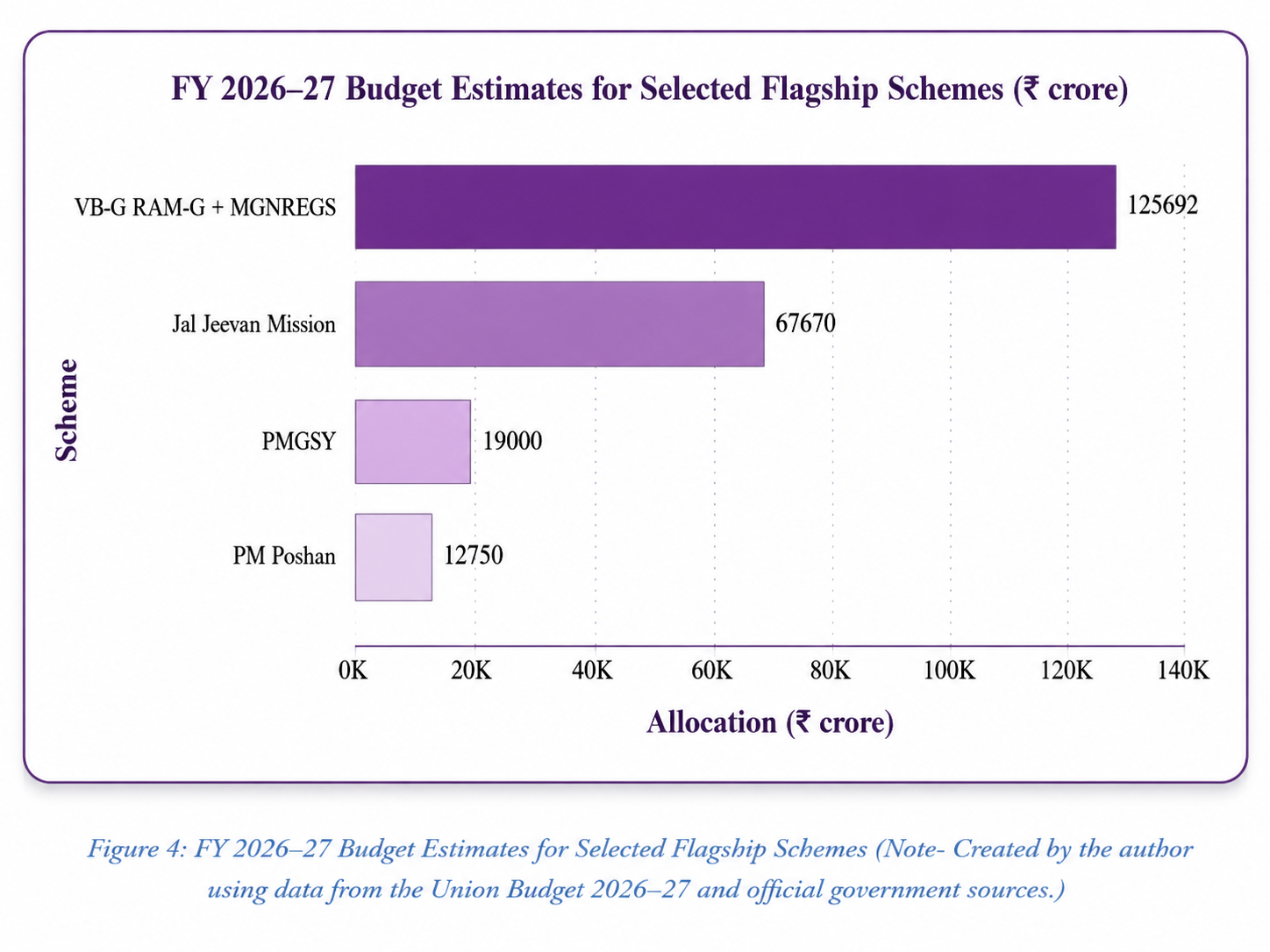
The four flagship programmes represent diverse sectors of public expenditure such as nutrition, drinking water, rural roads, and rural livelihoods. While all receive substantial budgetary allocations, the following case studies show that higher expenditure and successful outputs do not always translate into better outcomes. Outcome budgeting therefore requires governments to evaluate not only financial outlays but also measurable results achieved for citizens.
Pradhan Mantri Poshan Shakti Nirman (PM POSHAN): Poshan Tracker had registered over 8.93 crore beneficiaries and maintained a live database tracking of nutrition indicators for more than 7.7 crore children using Aadhaar-authenticated records. It also monitored the growth of over 6.3 crore children under five, covering nearly 94% of registered beneficiaries in this age group (Bureau, 2026). This strengthens real-time outcome monitoring.
The PM POSHAN Scheme has been extended until 30 September 2026, or until its approval under the 16th Finance Commission cycle, whichever is earlier ((IBEF), 2025). Recently, 22 States and Union Territories that responded to the Ministry of Education’s call for feedback on the PM-POSHAN scheme have urged the Centre to increase the honorarium for cooks and helpers, highlighting concerns over low remuneration and workforce sustainability (IAS, 2026). The Parliamentary Standing Committee has further recommended that the midday meal scheme be eventually extended for students up to Class 12 (Harigovind, 2026). An extended costing estimate for 2022-23, India would need to invest at least 48,440 crores annually on direct nutrition interventions. This suggests that long-term nutrition outcomes require sustained investment beyond existing programme funding (Singh, 2026).
Jal Jeevan Mission (JJM): The Jal Jeevan Mission has been extended until December 2028, with greater emphasis on source sustainability while maintaining 81.6% rural tap-water coverage (JJM, 2026). While 98% of households had functional tap connections (output), only around 75% received water that met the Mission's prescribed standards for quantity, quality, and regularity (outcome) (Chatterjee, 2026). This indicates that physical infrastructure alone does not ensure reliable service delivery.
Pradhan Mantri Gram Sadak Yojana (PMGSY): The fourth phase, PMGSY-IV, was recently launched. A budget of ₹18,907 crore was allotted for FY 2026–27 to construct 26,474 km of rural roads (Capital Market News, 2026). It aims to connect 25,000 unconnected habitations through 62,500 km of all-weather roads. The total financial outlay is ₹70,125 crore (Academy, 2026). The expansion of rural roads has improved physical connectivity. However, better roads alone do not guarantee improved livelihoods unless they are accompanied by investments in healthcare, education, market access and other essential services.
VB-GRAM-G: The Viksit Bharat–Guarantee for Rozgar and Ajeevika Mission (Gramin) Act, 2025 [VB-G RAM G] replaces MGNREGA on 1 July 2026. The employment guarantee rises from 100 to 125 days. A Central allocation of ₹95,692.31 crore has been made for FY 2026–27, the highest-ever budget estimate for rural employment. With the corresponding estimated State share, the total programme outlay is expected to exceed Rs 1.51 lakh crore. The wages are transferred directly through DBT and the National Electronic Fund Management System (IANS, 2026).
Goa was the first state to implement the VB-GRAM G Scheme on 29 June 2026, with effect from 1 July 2026, introducing biometric attendance, GPS-based worksite monitoring, geotagging, and a State Gramin Rozgar Guarantee Council (SCC Times, 2026). These reforms aim to strengthen monitoring. As the Act came into force recently, there is insufficient independent evidence to assess whether these governance reforms have improved programme outcomes. MGNREGA itself was never independently audited by CAG at the Union level after 2013.
Recommendations
Since outcome budgeting now influences major public expenditure, key provisions such as mandatory outcome evaluations, transparent funding methods and periodic scheme reviews should be incorporated into legislation rather than remaining administrative guidelines. This would provide policy continuity and institutional stability across governments.
A fixed and publicly available audit cycle should be introduced for major central sector and centrally sponsored schemes. Independent performance audits at regular intervals would strengthen accountability and provide objective evidence on whether programmes are achieving their intended outcomes.
Monitoring frameworks should move beyond measuring physical achievements alone. Indicators should also focus on the quality and long-term impact of public services. For example, PM Poshan should track improvements in children’s nutritional status alongside meal coverage, while PMGSY should assess whether new roads improve access to schools and healthcare facilities.
Government programmes addressing related developmental challenges should share data through integrated digital platforms. Jal Jeevan Mission linking with water conservation, sanitation and watershed programmes would enable more coordinated planning and improve the effectiveness of public expenditure.
States that have successfully integrate outcome indicators into budgeting can serve as models for others. Good practices such as Haryana's SDG-aligned budgeting should be adapted during the implementation of PMGSY-IV, Jal Jeevan Mission 2.0, and VB-G RAM-G to strengthen results-based governance across the country.
Conclusion
India is entering a new phase of result-based governance; with the 16th Finance Commission cycle underway, PMGSY-IV launched, VB-G RAM-G replacing MGNREGA, Jal Jeevan Mission moving into its next phase, and PM POSHAN awaiting approval under the new funding cycle. The next phase will determine whether outcome budgeting becomes a tool for real accountability or remains a reporting exercise. Ultimately, the true measure of success will not be the size of budget allocations, but the extent to which they improve the quality of life of citizens.
References
(IBEF), I. B. E. F. (2025). Mid-Day Meal Scheme (PM POSHAN). India Brand Equity Foundation. here
Academy, K. (2026). 25 Years of PMGSY Rural Road Development India. KPIAS Academy. here
Anand Trivedi. (2022). OUTPUT-OUTCOME FRAMEWORK: A PARADIGM SHIFT IN OUTCOMES-BASED GOVERNANCE. IIPA Digest, 16–19. here
Bureau, O. (2026). How is Poshan Tracker transforming nutrition governance? Organiser. here
CAG. (2018). 2.1 Objectives of Outcome Budget. here
Capital Market News. (2026, June 19). Government Allocates Rs 18,907 Cr for 26,474 km Rural Roads under PMGSY in FY 2026-27. Business Standard. here
Chatterjee, V. (2026, July 17). Jal Jeevan 2.0 must deliver water, not just more tap connections. Business Standard. here
Chitravanshi, R. (2025, November 17). The Sixteenth Finance Commission submits its five-year fiscal blueprint. Business Standard. here
Dasgupta, S. (2023, December 1). No CAG Performance Audit of MGNREGA for 10 Years Poses Serious Questions. The Wire. here
DMEO. (2023a). BEST PRACTICES COMPENDIUM ON OUTCOME BUDGETING. here
DMEO. (2023b). Overview: Data Governance Quality Index (DGQI). NITI Aayog. here
DMEO. (2024). Session 1: Outcome-based Monitoring to Enhance Evidence-Based Implementation | DMEO | Development Monitoring and Evaluation Office | Attached office under NITI Aayog. NITI Aayog. here
Harigovind, A. (2026, March 18). Provide breakfast too under PM-POSHAN, extend scheme to cover students up to Class 12: Parliamentary panel. The Indian Express. here
IANS. (2026, July 24). VB-G RAM G: Direct Wage Transfers for Rural Workers. NewKerala.Com. here
IAS, S. (2026). PM-POSHAN Scheme: Strengthening School Nutrition and Support Staff Welfare. Sanskriti IAS. here
James, K., Patel, K., & Singh, A. (2022). Reforming the Public Financial Management System in India (34; CSEP Working Paper, Issue September). here
JJM. (2026). Jal Jeevan Samvad – March 2026 (Vol. 8, Issue 3). here
Mahendru, V. (2021). Outcome Budgeting in India: The Efforts being made at the Union and State Levels. here
Ministry of Finance. (2026). Output Outcome Monitoring Framework 2026–27 (Major Central Sector & Centrally Sponsored Schemes). here
Mishra, S. (2011). Outcome Budgeting in India: The Need for Re-Engineering. Journal of Defence Studies, 5(2). here
PRS. (2026). Report of the 16th Finance Commission for 2026–31. PRS Legislative Research. here
SCC Times. (2026). VB-GRAM G Scheme, 2026: Goa Introduces 125-Day Rural Employment Framework with Digital Monitoring and Worker Safeguards. SCC Times. here
Shankar, A. (2026, February 3). Gender Budget 2026 shrinks at revised stage, exposing Rs 51,000 crore gap. The Federal. here
Singh, A. (2026). POSHAN Abhiyaan: Budget 2026’s Nutrition Delivery Test. Observer Research Foundation (ORF). here